
By the Know a Pro Team
Updated 24 Sept 20268 min read
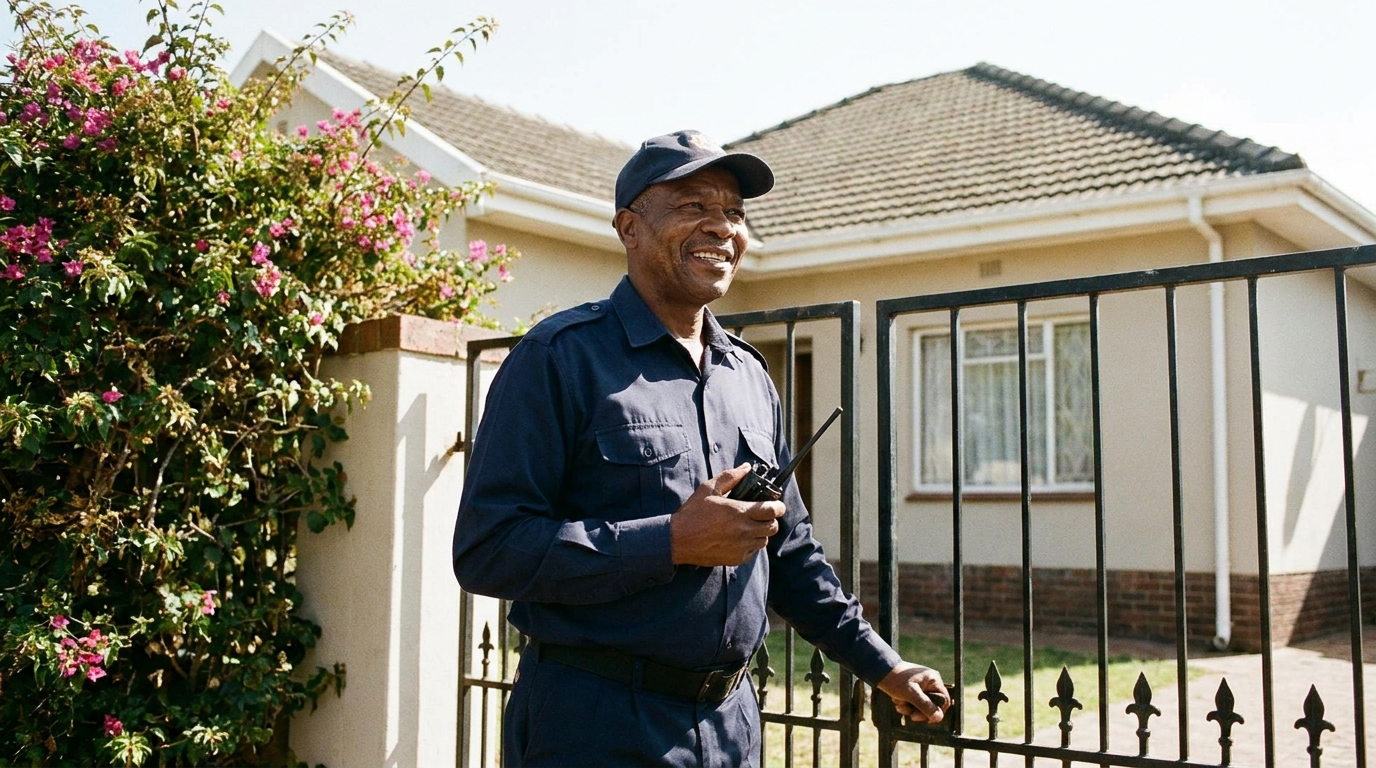
Security customers need more information than “we keep you safe.”
Someone comparing an alarm installer, CCTV specialist, guarding company or armed-response provider needs to understand exactly what you provide, where you operate, what ongoing services are included and which regulatory requirements apply to your work.
A useful profile makes those details easier to understand without promising outcomes no security provider can guarantee.
Start with exactly what you provide
Don't simply describe yourself as a “security company” if you can be more specific.
Depending on your business, you might provide:
- alarm installation;
- alarm monitoring;
- armed response;
- CCTV installation;
- CCTV maintenance;
- guarding;
- access control;
- gate automation;
- electric fencing;
- outdoor beams;
- panic systems;
- intercoms; or
- another security-related service you genuinely provide.
Only list services you actually offer.
Don't bundle different services together without explaining them
Installing an alarm isn't automatically the same service as monitoring it.
Installing CCTV isn't the same as providing guarding.
Electric-fence work can have specific regulatory requirements.
Make it clear whether you provide:
- installation only;
- supply and installation;
- monitoring;
- armed response;
- maintenance;
- repairs;
- guarding;
- ongoing support; or
- combinations of these.
Explain your service area
Tell customers where you actually operate.
This is particularly useful for services such as armed response and guarding, where operational coverage matters.
Explain whether you serve:
- particular suburbs or towns;
- a wider region;
- multiple branches; or
- selected areas nationally.
Don't imply that you provide response coverage in an area unless you actually do.
Describe PSiRA registration accurately
The Private Security Industry Regulatory Authority (PSiRA) regulates South Africa's private security industry.
PSiRA states that a person may not render a security service for remuneration, reward, a fee or benefit unless registered as a security service provider in terms of the applicable legislation.
If PSiRA registration applies to the services you provide, state your relevant registration information accurately.
Customers can independently verify security businesses and individuals through PSiRA's official verification services.
Don't describe Know a Pro's ID Verified badge as proof of PSiRA registration.
Make it easy for customers to perform their own PSiRA check
If you're required to be PSiRA registered, don't make customers guess whether you are.
Give them accurate information they can use when carrying out their independent check.
PSiRA provides verification facilities for both security businesses and individuals.
Keep your registration information current.
Do not claim that Know a Pro has independently confirmed your PSiRA status unless Know a Pro actually introduces and operates such a verification process in future.
Understand the difference between identity and industry registration
Know a Pro's ID Verified badge and PSiRA registration are separate things.
ID Verified relates to identity verification through Know a Pro's signup process.
PSiRA registration relates to the applicable private-security regulatory framework.
One does not replace the other.
Electric fencing needs its own compliance information
Don't treat electric-fence work as simply another alarm feature.
South Africa's Electrical Machinery Regulations provide for registered electric-fence-system installers and electric-fence system certificates.
If you perform work that requires this registration or certification, describe your status and the documentation relevant to the work accurately.
Don't imply that Know a Pro's ID Verified badge replaces electric-fence installer registration or certification.
Explain your alarm installations properly
If you install alarms, tell customers what kinds of systems you work with and what your service can include.
Useful information may include:
- control panels;
- indoor sensors;
- outdoor sensors;
- door/window contacts;
- panic buttons;
- sirens;
- communication equipment;
- apps or remote access;
- backup batteries;
- programming;
- installation; and
- ongoing support.
Make it clear whether monitoring or armed response is separate.
Give useful information about CCTV
Customers comparing CCTV providers may want to know whether you handle:
- cameras;
- recorders;
- storage;
- cabling;
- remote viewing;
- networking;
- backup power;
- installation;
- maintenance; and
- upgrades.
Avoid vague promises such as “complete protection.”
A CCTV system is one security measure. It doesn't guarantee that crime won't occur.
Respect privacy when showing CCTV work
Photographs of completed installations can help demonstrate what you do, but security work can expose sensitive information.
Be careful about publishing:
- customer addresses;
- property layouts;
- camera blind spots;
- alarm-panel locations;
- gate-access arrangements;
- security codes;
- Wi-Fi details;
- vehicle registrations; or
- other information that could identify or expose a customer's security setup.
Use customer photographs only where you have appropriate permission and remove unnecessary sensitive information.
Explain monitoring separately from installation
If you provide monitoring, explain how the service works in plain language.
Customers may need to understand:
- what is monitored;
- how signals are communicated;
- what happens when an alarm activates;
- escalation procedures;
- panic procedures;
- communication failures; and
- monthly fees.
If another company provides monitoring, don't imply that your business provides it directly.
Explain armed response accurately
If you provide armed response, explain:
- where you provide it;
- what activates a response;
- what the customer needs to do;
- what the service includes;
- contract requirements; and
- any important limitations.
Don't guarantee an exact response time unless your contractual terms genuinely create such an obligation and you can accurately describe it.
Even then, don't turn a contractual service standard into a promise that every incident will have the same outcome.
Don't promise that you can prevent crime
Security equipment and services are intended to manage security risks, but no provider can guarantee that a property will never experience:
- burglary;
- theft;
- vandalism;
- intrusion;
- equipment failure; or
- another security incident.
Avoid absolute claims such as:
- “100% secure”;
- “crime-proof”;
- “guaranteed protection”;
- “zero break-ins”; or
- similar promises.
Describe what your service actually does instead.
Explain backup power realistically
Customers increasingly ask what happens when mains power fails.
Explain which parts of the system have backup power and how the arrangement is designed to operate.
Depending on the installation, this could involve:
- alarm batteries;
- CCTV equipment;
- networking equipment;
- communication equipment;
- electric fencing;
- gate systems; or
- other components.
Don't simply promise that “everything keeps working” unless that's genuinely how the installed system is designed.
Explain equipment ownership
If customers purchase equipment outright, say so.
If equipment is rented, financed, leased or remains the property of the security company, explain that clearly.
Customers should be able to understand:
- who owns the equipment;
- what happens if the contract ends;
- whether equipment must be returned;
- whether removal charges apply; and
- whether the equipment can work with another provider.
Be clear about recurring charges
Don't advertise only the installation price if meaningful ongoing charges also apply.
Depending on your service, these may include:
- monitoring;
- armed response;
- equipment rental;
- cloud storage;
- SIM/data;
- maintenance;
- software;
- support; or
- other service fees.
Make it easy to distinguish once-off costs from recurring costs.
Explain contracts and cancellation
If customers enter an ongoing agreement, clearly communicate:
- contract term;
- monthly fee;
- increases;
- notice requirements;
- cancellation;
- early termination provisions;
- equipment ownership;
- maintenance;
- callouts; and
- other material terms.
Don't hide important conditions in marketing copy.
Protect customer security information
Security businesses can hold unusually sensitive information.
Depending on your service, this might include:
- alarm codes;
- passwords;
- camera credentials;
- Wi-Fi information;
- access codes;
- panic arrangements;
- customer addresses;
- property layouts; and
- information about when a property is occupied.
Handle that information appropriately and don't expose it through your profile, portfolio, social media or review responses.
Explain maintenance and support
Tell customers what happens after installation.
Explain:
- recommended maintenance;
- fault reporting;
- support channels;
- callout charges;
- battery replacement;
- warranties where applicable;
- software or firmware support where relevant; and
- what happens if equipment fails.
Don't imply that installation means a system will operate indefinitely without maintenance.
Use reviews responsibly
Genuine customer reviews can describe previous experiences with your business.
They may discuss:
- communication;
- installation;
- support;
- billing;
- maintenance; or
- problem resolution.
Don't say reviews prove you're reliable, trustworthy or faster than another security provider.
Don't write reviews for customers or tell them what rating to leave.
Past experiences don't guarantee future response times or security outcomes.
Understand what ID Verified means
South African Pros complete identity verification as part of the Know a Pro signup process before their profile can go live.
Once completed, the profile can display the ID Verified badge.
ID Verified relates to identity verification.
It does not prove:
- PSiRA registration;
- electric-fence installer registration;
- qualifications;
- competence;
- security expertise;
- reliability;
- response performance;
- trustworthiness;
- safety; or
- quality.
Don't tell customers that ID Verified means Know a Pro endorses or guarantees your security service.
Respond quickly without making careless promises
Security enquiries can sometimes feel urgent.
A prompt response is useful, but make sure you understand what the customer actually needs before recommending equipment, quoting or promising service.
Depending on the enquiry, ask about:
- property type;
- location;
- existing security;
- service required;
- coverage needed;
- monitoring;
- response;
- connectivity;
- power;
- backup requirements; and
- budget.
A proper site assessment may be appropriate before finalising some installations.
Keep your profile current
Update your profile if you change:
- services;
- service area;
- monitoring options;
- response coverage;
- contact details;
- relevant registration information;
- equipment or systems you support; or
- business details.
Don't leave outdated regulatory or service information visible.
Share your Know a Pro profile
Your Know a Pro profile has its own page link, which you can share through appropriate business channels such as your:
- website;
- WhatsApp;
- Facebook;
- Instagram;
- email signature; or
- other business material.
It gives potential customers another place to review the information you've chosen to provide before deciding whether to contact you.
What it costs to list on Know a Pro
Know a Pro uses a monthly membership model.
Independent Pro — R300/month
For independent Pros and sole traders.
Registered Business — R500/month
For registered businesses.
Know a Pro does not take a percentage of the jobs you receive through the platform. Your applicable monthly membership fee still applies.
Prices shown are current at the time of publication and may change.
Make your security service easy to understand
A strong security profile doesn't need to promise that you're the safest or most trustworthy company in town.
Explain what you provide, where you operate, what regulatory information applies, how your service works and what customers should expect.
Clear, accurate information gives customers something useful to compare.
Frequently asked questions
What does it cost to list my security business?
The Independent Pro plan is R300 per month for independent Pros and sole traders. The Registered Business plan is R500 per month for registered businesses. Know a Pro does not take a percentage of the jobs you receive through the platform. Your applicable monthly membership fee still applies.
Can I show my PSiRA registration on my profile?
You can accurately state relevant professional or regulatory information in your profile where the profile fields and format allow it. Customers should independently verify applicable PSiRA registration through PSiRA's official services. Know a Pro's ID Verified badge is separate from PSiRA registration and does not mean Know a Pro has independently verified your PSiRA status.
Does ID Verified mean my security business is PSiRA verified?
No. ID Verified relates to identity verification through Know a Pro's signup process. It doesn't prove PSiRA registration, qualifications, security competence, reliability or trustworthiness. Applicable PSiRA registration should be independently checked through PSiRA.
Can an independent security installer list on Know a Pro?
An Independent Pro can list the services they genuinely provide, but listing on Know a Pro doesn't replace any registration, certification or other legal requirements that apply to those services. Security and electric-fence work can have specific regulatory requirements, so describe your services and status accurately.
Will listing guarantee that I get security enquiries or clients?
No. Know a Pro doesn't guarantee a number of enquiries, jobs, customers, clients or revenue. Your profile provides a place to describe your services and relevant information to people using the platform.
Find a Security Services pro you can trust
Every pro on Know a Pro is ID-verified before they go live. Search your area and contact a verified pro directly, no middleman.
Find a Pro