
Iqela le-Know a Pro
Kuhlaziywe 24 Sept 20268 imiz yokufunda
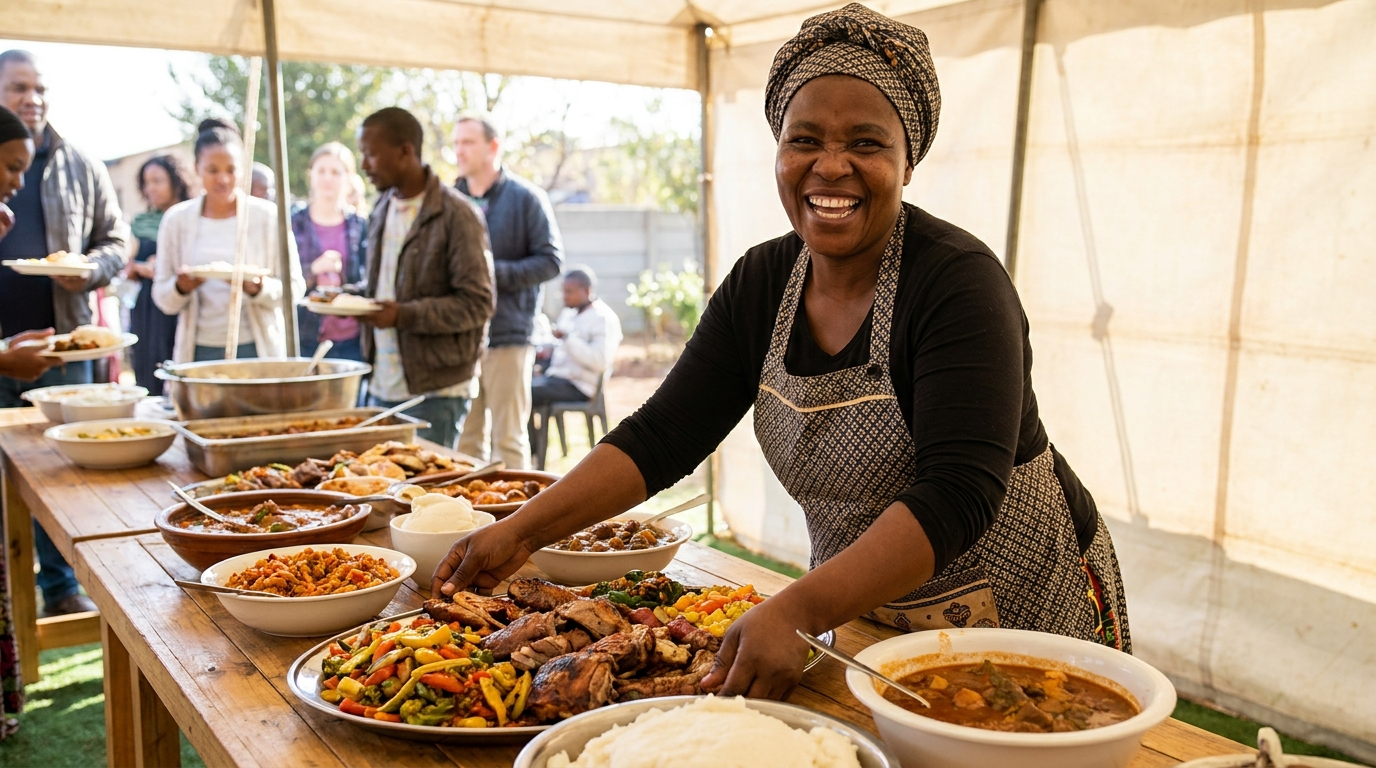
Food is visual, but a useful profile needs to do more than make someone hungry.
Customers may also want to know what you make, what it costs, where you're based, whether you deliver, how far ahead they need to order and whether you can accommodate particular dietary needs.
For catering and custom orders, those details become even more important.
Start by explaining what you actually offer
Tell customers what kind of food business you run.
That might be:
- a restaurant or café;
- a takeaway;
- an event caterer;
- a home baker;
- a home cook;
- a food truck;
- a market-food business;
- a private chef;
- a meal-prep service;
- a coffee cart; or
- another food or drink service.
If you do several things, explain them clearly rather than expecting photographs to tell the whole story.
Show recent examples of your food
Good photographs can help customers understand your style, presentation and the kinds of orders you handle.
Consider showing a useful mix of:
- signature dishes;
- menu items;
- catering setups;
- cakes or baked goods;
- portion examples;
- event work; or
- packaging, where relevant.
Use photographs of your own work and keep them reasonably current.
Don't present another business's food or heavily misleading images as your own.
Make your menu useful
If you have a menu, keep it readable and current.
Depending on your business, useful information can include:
- item name;
- description;
- portion or serving information;
- price;
- available sizes;
- sides or extras;
- customisation options;
- minimum quantities;
- advance-order requirements; and
- collection or delivery options.
If prices change frequently, make that clear rather than leaving obviously outdated pricing in place.
Explain catering pricing clearly
Catering can be priced in many different ways.
If you use per-person pricing, explain what that amount includes.
Additional costs may include:
- staffing;
- travel;
- delivery;
- setup;
- equipment;
- crockery;
- glassware;
- serving stations;
- overtime; or
- other agreed extras.
A useful quote should make the scope clear enough for the customer to understand the total offer.
Don't advertise one attractive per-person number if compulsory costs make the real price materially different.
Explain minimum orders and lead times
Customers need to know whether they can order today or need to plan weeks ahead.
Where relevant, explain:
- minimum order quantities;
- minimum spend;
- notice required;
- final guest-count deadline;
- cut-off time for ordinary orders;
- custom-order lead time; and
- peak-period availability.
Keep these details current.
Explain tastings accurately
If you offer tastings for catering or events, explain:
- when they're available;
- what is included;
- whether there's a charge;
- how many people may attend; and
- whether the tasting fee is credited toward a later booking, if that is genuinely your policy.
Don't simply advertise “free tastings” unless that is consistently true under the stated conditions.
Be precise about dietary options
If you offer vegetarian, vegan, gluten-free or other options, describe them accurately.
Don't make broader claims than your kitchen processes support.
Dietary preference and allergy safety aren't the same thing.
Treat allergy questions seriously
Customers with food allergies may need information about:
- ingredients;
- preparation areas;
- shared equipment;
- cross-contact;
- substitutions; and
- whether you can safely accommodate their needs.
Don't describe food as allergen-free unless you can appropriately support that claim.
If you cannot safely accommodate a particular allergy, be clear rather than guessing.
Describe Halaal or kosher status accurately
If you use terms such as Halaal or kosher, make sure your wording accurately describes what you offer.
If you hold formal certification and choose to mention it, identify the relevant certification accurately and keep the information current.
Don't present “Halaal-friendly”, selected Halaal ingredients or another informal description as if it automatically means formal certification.
The same principle applies where a specific kosher certification is claimed.
Understand your Certificate of Acceptability responsibilities
South Africa's general food-premises hygiene regulations provide for a Certificate of Acceptability (CoA) issued through the relevant local authority.
Subject to the regulations and their exceptions, food generally may not be handled on food premises without a valid CoA for those premises.
Understand the requirements that apply to your food premises and activities.
Know a Pro's ID Verified badge is separate from the CoA and does not verify it.
Home food businesses aren't automatically exempt
Running a food business from home doesn't mean applicable food-premises and hygiene requirements disappear.
If you bake, cook or prepare food commercially from home, understand the requirements that apply to your premises and activities.
Don't tell customers that being home-based makes you exempt unless a specific legal exemption genuinely applies.
Put important catering details in writing
Large orders and events involve many moving parts.
Written confirmation can cover:
- event date;
- venue;
- guest count;
- menu;
- dietary requirements;
- service style;
- setup;
- staffing;
- equipment;
- price;
- deposit;
- balance;
- final-number deadline;
- cancellation terms; and
- what happens if the scope changes.
Clear records protect against misunderstandings for both sides.
Make deposits and cancellation terms clear
If you require a deposit, explain:
- how much is required;
- when it is due;
- when the balance is due;
- whether any amount is refundable;
- cancellation deadlines;
- what happens when customer numbers change; and
- what happens if you need to cancel.
Don't wait until after payment to introduce important terms.
Explain delivery and collection
If customers can collect, explain where and when.
If you deliver, consider explaining:
- delivery areas;
- delivery charges;
- minimum order;
- delivery windows;
- who should receive the order; and
- any relevant storage or serving instructions.
For events, make it clear whether delivery also includes setup.
Give custom cakes their own information
If custom cakes are part of your business, useful details may include:
- available sizes;
- approximate servings;
- flavours;
- fillings;
- design process;
- lead time;
- deposit;
- collection or delivery;
- storage; and
- what information you need from the customer.
Inspiration images can help communicate a style, but don't promise an exact replica where handmade variation is expected.
Keep specials and availability current
If you publish specials, seasonal menus or availability information, update or remove them when they expire.
An old Valentine's menu or a fully booked date shouldn't continue appearing as a current offer.
Use reviews responsibly
Genuine customer reviews can describe previous experiences with your food or service.
They aren't proof of food-safety compliance and don't guarantee that every future customer will have the same experience.
Don't ask customers for a specific star rating and don't write reviews for them.
Understand what ID Verified means
South African Pros complete identity verification as part of the Know a Pro signup process before their profile can go live.
Once completed, their profile can display the ID Verified badge.
ID Verified relates to identity verification.
It does not verify:
- your food premises;
- Certificate of Acceptability;
- hygiene;
- food safety;
- ingredients;
- allergen controls;
- Halaal or kosher certification;
- menu claims;
- product quality;
- reliability; or
- regulatory compliance.
Don't present ID Verified as proof that your food is safe, that your business is trustworthy or that Know a Pro endorses your food business.
Keep your profile current
Review your information whenever something important changes.
Pay particular attention to:
- menu;
- prices;
- photographs;
- trading hours;
- service area;
- dietary information;
- certification claims;
- collection or delivery;
- lead times;
- catering information;
- contact details; and
- specials.
Share your profile
Your Know a Pro profile has its own shareable page link.
You can use it through appropriate channels such as:
- your website;
- social media;
- WhatsApp;
- email; or
- other marketing.
It gives potential customers another place to see the information you've chosen to provide and contact you.
What it costs to list
Know a Pro currently has two monthly membership plans:
Independent Pro — R300/month
Registered Business — R500/month
Know a Pro does not take a percentage of the jobs you receive through the platform. Your applicable monthly membership fee still applies.
Make your food business easy to understand
You don't need to promise customers that your food is the best in town.
Show them what you actually make.
Useful photographs, clear menus, transparent pricing, accurate dietary information and straightforward ordering terms make it easier for someone to understand what you offer before contacting you.
This article provides general guidance for food businesses and was reviewed in September 2026. Food-safety, food-premises, certification, allergen, labelling, consumer, municipal and other requirements vary according to the business, food and activity involved. Confirm and comply with the requirements that apply to your business and obtain professional or regulatory guidance where appropriate.
Imibuzo ebuzwa rhoqo
What does it cost to list my food business?
The Independent Pro plan is R300 per month and the Registered Business plan is R500 per month. Know a Pro does not take a percentage of the jobs you receive through the platform. Your applicable monthly membership fee still applies.
I bake or cook from home. Can I list my business?
If your food business fits the platform's available listing options, describe what you make and how customers can contact you. Being home-based doesn't automatically exempt a food business from applicable food-premises, hygiene or other requirements, so understand the requirements that apply to your activities.
Does ID Verified mean Know a Pro has checked my Certificate of Acceptability?
No. ID Verified relates to identity verification. It doesn't verify your food premises, Certificate of Acceptability, hygiene, food safety, ingredients, allergen controls, religious certification or regulatory compliance.
Can I use my profile for catering enquiries?
You can describe your catering services, menus, pricing approach, service area, lead times and contact options so potential customers can understand what you offer and get in touch. Know a Pro doesn't guarantee enquiries, catering work or bookings.
Will listing guarantee more food orders or customers?
No. Know a Pro doesn't guarantee orders, enquiries, bookings, customers, repeat customers, sales or revenue. Your profile gives you a place to present useful information about your food business to people using the platform.
Ukutya & Iziselo: fumana ingcali onokuyithemba
Yonke ingcali ku-Know a Pro iqinisekiswa nge-ID phambi kokuba ibonakale. Khangela kwindawo yakho uze uqhagamshelane nengcali eqinisekisiweyo ngokuthe ngqo, ngaphandle komntu ophakathi.
Fumana Ingcali