
Iqela le-Know a Pro
Kuhlaziywe 25 Sept 20267 imiz yokufunda
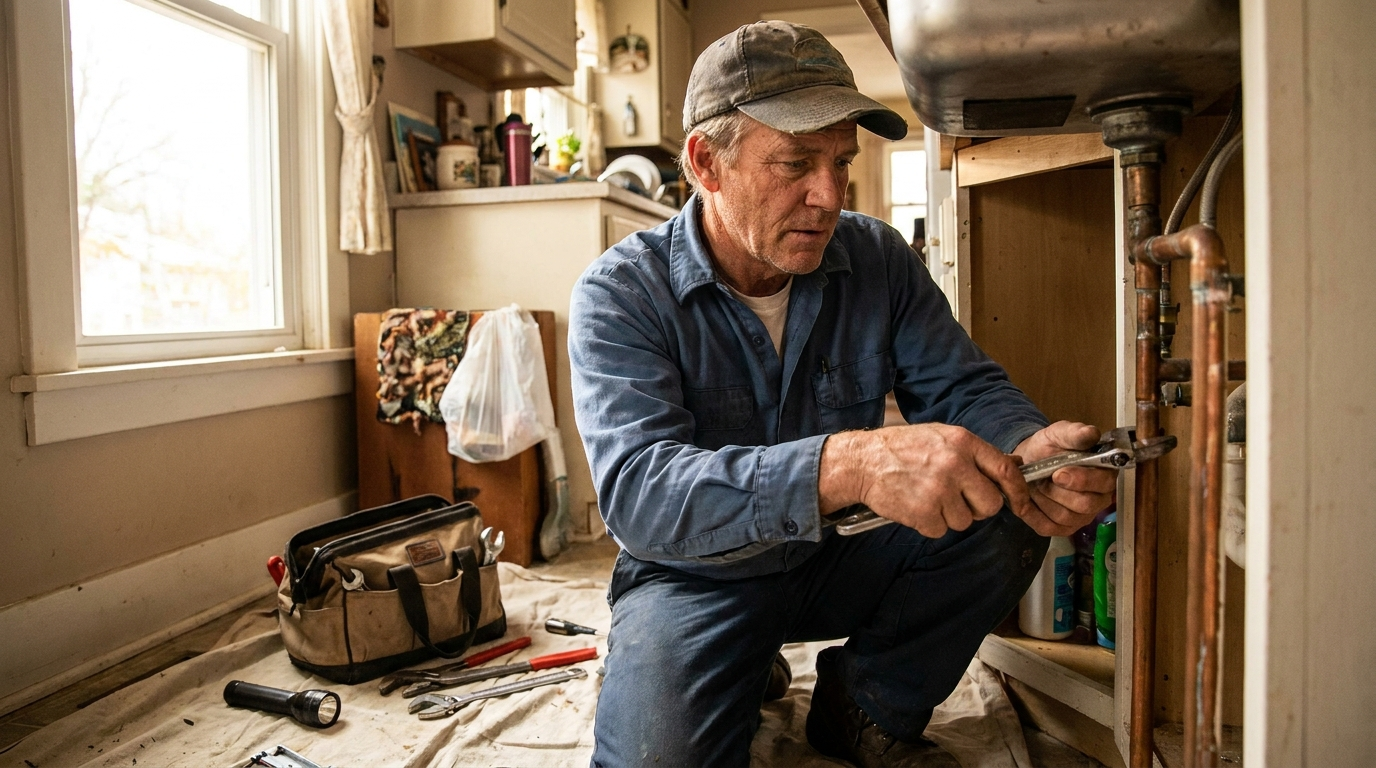
Plumbing problems rarely arrive at a convenient time
A dripping pipe might give you some warning.
A burst pipe, overflowing fixture or sudden loss of hot water might not.
You don't need to know how to fix the plumbing yourself.
But knowing a few practical things about your home can help you respond to a problem, give the plumber useful information and understand the questions they ask.
Here are some things worth knowing before you need them.
1. Know where you can shut off the water
Don't wait for water to be spreading across the floor before trying to work out how your supply is isolated.
Find out in advance where the relevant water shut-off point is for your property and how it operates.
Every property is different. Depending on the property and installation, there may also be local isolation valves for particular fixtures or appliances.
If water is escaping uncontrollably and it is safe and appropriate to do so, isolating the relevant water supply can help limit continued water flow while you arrange assistance.
Find it before there's an emergency
When everything is working normally:
- identify the relevant shut-off;
- make sure you know how it operates;
- make sure it remains reasonably accessible; and
- make sure other responsible household members know where it is, where appropriate.
If a valve is stuck, damaged or difficult to operate, don't force it. Mention it to a plumber instead.
2. Tell the plumber what is actually happening
“I have a leak” is a starting point.
More detail can help the plumber understand what they may be dealing with before arriving.
Useful information could include:
- where you can see the problem;
- when you first noticed it;
- whether water is still flowing;
- whether you've isolated the water;
- whether the problem is affecting one fixture or several;
- whether a drain is slow, completely blocked or overflowing;
- whether there are unusual sounds or smells;
- whether hot water is affected;
- whether any previous work was recently done in the area; and
- photos or a short video, if the plumber asks and it is safe to take them.
This doesn't replace the plumber's own assessment. It simply gives them more information to work with.
3. Don't hide the history
If someone has already worked on the problem, tell the plumber.
Also mention if:
- the same issue has happened before;
- you've tried a drain-cleaning product;
- a fixture was recently installed or replaced;
- building or renovation work recently took place nearby; or
- you've noticed other related symptoms.
This isn't about assigning blame.
Previous history may be useful when diagnosing the problem.
4. Be careful what goes down drains and toilets
The Water Research Commission advises that toilets should be used for the three Ps: pee, poo and toilet paper. It specifically warns against flushing so-called “flushable” wipes.
It also advises against pouring cooking grease or oils down drains, because fat and grease can accumulate and contribute to blockages.
Toilets
Don't flush items such as:
- wipes, including products marketed as flushable;
- cloths;
- sanitary products;
- nappies;
- cotton products; or
- other foreign objects.
Kitchen drains
Avoid pouring cooking fats, grease or cooking oil down the drain.
Allow fats and grease to cool and dispose of them appropriately rather than washing them into the wastewater system.
Hair and solids
Where practical, simple strainers or drain guards can help catch hair or larger solids before they enter a drain.
They won't prevent every blockage, but they can reduce what goes into the pipes.
5. Tell the plumber if you've used a chemical drain cleaner
If you've already used a chemical drain-cleaning product, tell the plumber before they work on the drain.
The product used, its concentration and what remains in the system can be relevant to how the plumber approaches the job and handles the area safely.
Follow the product's safety instructions and don't mix different drain-cleaning chemicals.
6. Clear safe access to the problem
If practical, move ordinary belongings away from the work area before the plumber arrives.
For example:
- clear items from under a leaking sink;
- move personal items away from the affected bathroom area;
- make access to the geyser or plumbing area available, where it is safe to do so; and
- secure pets if necessary.
Don't move electrical equipment through standing water or enter an area that appears electrically unsafe.
Leave roofs, ceilings and other hazardous areas to the plumber or another appropriate professional.
7. A call-out fee isn't the same as the repair price
A plumber may charge a call-out or attendance fee for travelling to the property and assessing the problem.
Charging structures vary between businesses.
Before confirming the visit, you can ask:
- Is there a call-out fee?
- What does it cover?
- Is diagnostic time included?
- Are labour and materials separate?
- Does after-hours work have a different rate?
- When will I receive an estimate or quote for additional work?
Clear answers help you understand what you're agreeing to before the plumber arrives.
8. A cheap quote and a good repair aren't the same question
Price is one part of comparing plumbing work.
Also consider:
- what work is included;
- the materials or components specified;
- exclusions;
- whether additional work needs approval;
- whether relevant credentials apply;
- whether a CoC is required or applicable to the work;
- warranties or guarantees actually offered by the provider; and
- payment terms.
A lower quote isn't automatically poor work, and a higher quote isn't automatically better work.
9. Ask whether credentials or a CoC matter for the job
Not every plumbing job has identical requirements.
The Plumbing Industry Registration Board (PIRB) is a South African professional body for plumbers. It has different plumber designations, including Qualified Plumber and Licensed Plumber.
PIRB states that its Licensed Plumber designation allows a plumber to issue PIRB Plumbing Certificates of Compliance under the applicable PIRB requirements.
Depending on the work being done, ask the plumber:
- whether a Plumbing Certificate of Compliance is applicable;
- whether they are able to issue the relevant certificate if required; and
- what registration or designation applies to the work.
You can check PIRB information independently where relevant.
10. ID Verified isn't a plumbing qualification
On Know a Pro, ID Verified means the Pro completed Know a Pro's required identity-verification process.
It doesn't mean the person is PIRB registered.
It doesn't mean they hold a particular plumbing designation.
It doesn't mean they are authorised to issue a PIRB CoC.
It doesn't prove workmanship, reliability or future service quality.
Where qualifications, registration or certification matter for the job, check those separately.
11. Reviews are useful context, not a plumbing credential
Reviews can help you understand experiences submitted by previous customers.
They don't replace checks for qualifications, registrations or certificates relevant to the work.
A good rating doesn't guarantee how your own job will turn out.
Before the plumber arrives: quick checklist
If you have a plumbing problem:
- If water is escaping uncontrollably, isolate the relevant water supply if it is appropriate and safe to do so.
- Note where the problem appears to be.
- Explain what you've observed and when it started.
- Mention previous repairs or products you've already used.
- Take useful photos or video if requested and safe.
- Clear safe access to the affected area where practical.
- Ask about the call-out or assessment fee and how further work will be priced.
- Ask about relevant credentials or a CoC where applicable.
You don't need to diagnose the problem yourself.
Give the plumber useful information and let them assess the plumbing.
The bottom line
A customer doesn't need to become a plumbing expert before making a call.
Knowing where the water can be isolated, explaining what you've observed, being upfront about previous attempts and understanding how the plumber charges can make the conversation clearer.
And where the work has specific qualification, registration or certification requirements, check those separately rather than relying on a profile badge or review score.
This article provides general consumer information and was reviewed in September 2026. Plumbing systems and requirements vary by property, municipality and type of work. In an emergency involving electricity, flooding, sewage or another immediate hazard, prioritise safety and contact the appropriate qualified service or emergency assistance.
Looking for a plumber?
Explore local plumbing Pros, compare their profiles and check the qualifications or registrations relevant to the work you need done.
Imibuzo ebuzwa rhoqo
Do home-service professionals charge a call-out fee?
Many do, particularly for smaller jobs. Others include travel and the first period of labour in a minimum charge. Ask whether a call-out fee applies and whether it is separate from the quoted labour cost.
What should I do before a plumber arrives?
If water is escaping uncontrollably, isolate the relevant water supply if you know how and it is safe to do so. Note what you've observed, mention previous repairs or products used, and clear safe access to the affected area where practical. You don't need to diagnose the problem yourself.
What shouldn't I flush down the toilet?
The Water Research Commission advises flushing only pee, poo and toilet paper. Items such as wipes, including products marketed as flushable, can contribute to wastewater blockages.
Does every plumbing job need a Certificate of Compliance?
Not every plumbing job has identical certification requirements. PIRB has requirements governing when its Plumbing Certificate of Compliance applies and who may issue one. Ask the plumber whether a CoC applies to your particular work and check current PIRB requirements where relevant.
Does ID Verified mean someone is a qualified plumber?
No. ID Verified means the Pro completed Know a Pro's required identity-verification process. It doesn't confirm plumbing qualifications, PIRB registration, Licensed Plumber status or authority to issue a Plumbing Certificate of Compliance. Check relevant plumbing credentials separately.
Iinkonzo Zasekhaya: fumana ingcali onokuyithemba
Yonke ingcali ku-Know a Pro iqinisekiswa nge-ID phambi kokuba ibonakale. Khangela kwindawo yakho uze uqhagamshelane nengcali eqinisekisiweyo ngokuthe ngqo, ngaphandle komntu ophakathi.
Fumana Ingcali