
Ithimba le-Know a Pro
Kubuyekezwe 25 Sept 20267 imiz yokufunda
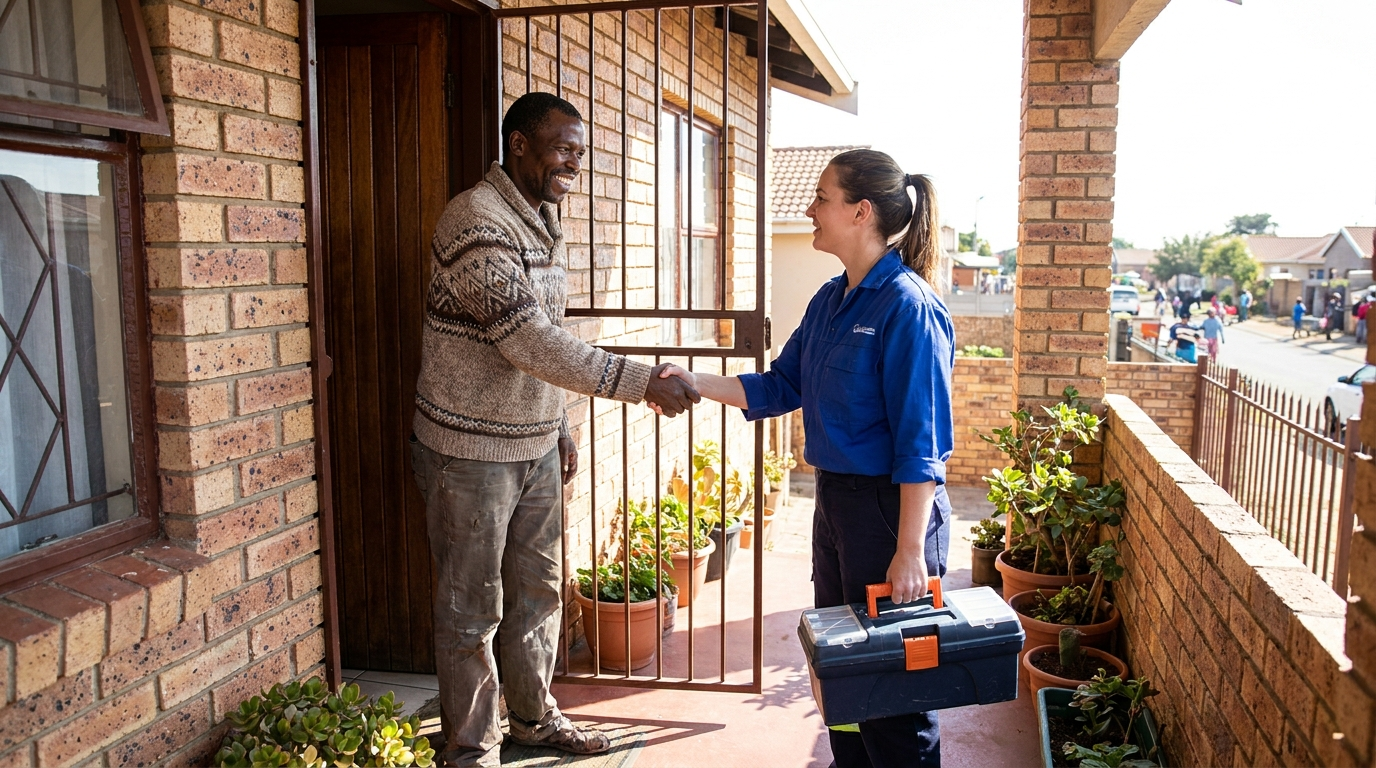
Having someone work inside your home is different from meeting a service provider elsewhere.
Depending on the job, they may need access to rooms, gates, keys, electrical boards, plumbing, security systems or other parts of your property.
That doesn't mean you should assume something will go wrong.
It does mean it's useful to know who is expected, what work they're there to do and what access they actually need.
Here are seven practical checks to consider before the visit.
1. Who is actually coming to your home?
Before the appointment, confirm who you expect to arrive.
Depending on the service, ask:
- Will the person I've been speaking to attend?
- Will an employee or team member come instead?
- How many people should I expect?
- Will subcontractors attend?
- What time or arrival window has been agreed?
- Who should I contact if something changes?
This is particularly useful when you're dealing with a business whose owner or profile holder won't personally perform every job.
Where ID Verified fits
On Know a Pro, South African Pros complete identity verification as part of signup before their profile can go live.
Once completed, the profile can display the ID Verified badge.
ID Verified means the Pro completed Know a Pro's required identity-verification process.
It does not necessarily mean that every employee, assistant or subcontractor who may arrive at your property has individually completed the same verification.
If someone other than the person you expected arrives, confirm the arrangement with the provider before giving access where appropriate.
2. What work are they there to do?
Make sure you both understand the job.
Depending on the service, confirm:
- what work is included;
- which rooms or areas are involved;
- what isn't included;
- whether materials are being supplied;
- whether anything needs to be moved beforehand;
- whether water or electricity needs to be switched off;
- whether additional work requires your approval; and
- whether the provider expects access to any other part of the property.
A clear scope helps you understand why someone needs access to a particular area.
Put important details in writing
For substantial work, an appropriate written record can help.
Depending on the job, this might be a quote, estimate, booking confirmation, job card, scope of work or contract.
Written terms don't guarantee performance, but they provide a clearer record of what was agreed.
3. Are there credentials you should check for this job?
Not every person who works in a home needs a formal qualification or professional registration.
But some types of work have specific South African regulatory, registration or certification requirements.
Where relevant, establish what applies to the particular service and verify important credentials independently with the appropriate official source.
ID Verified doesn't replace this.
Requirements depend on the work
Whether a credential is required depends on the work and the applicable rules, not simply whether a job feels risky.
Electrical, gas, security, healthcare, childcare and other services can involve very different requirements.
They don't all use the same qualification or clearance system.
Certificates of Compliance are job-specific
Where electrical work requires a Certificate of Compliance under the applicable South African electrical-installation framework, the certificate and who may issue it depend on the regulatory requirements applying to that work.
If your job involves electrical work, check the requirements relevant to that particular work rather than relying on a general rule.
4. What do the reviews and previous work tell you?
Reviews can provide context about previous customer experiences.
For work inside homes, you may find comments relating to:
- communication;
- punctuality;
- organisation;
- cleanliness;
- workmanship;
- pricing clarity; or
- how changes were handled.
Read reviews in context.
They don't prove someone is safe to admit to your property and don't guarantee your experience.
Look at relevant work
Where examples or photographs are useful, consider whether they relate to work similar to what you need.
A portfolio can help you understand style and previous projects, but it isn't a guarantee of future workmanship.
5. Do you understand the price and payment arrangements?
Before work begins, understand:
- the agreed or estimated price;
- what is included;
- what could change the price;
- the deposit, if any;
- what the deposit covers;
- when payments are due;
- how extra work will be approved; and
- applicable cancellation terms.
Deposits depend on the job
A deposit isn't automatically suspicious.
It may be needed for materials, equipment, custom work or to reserve time.
Full upfront payment also isn't automatically fraudulent.
The appropriate arrangement depends on the service.
For substantial work, make sure you understand why payment is required and keep appropriate payment records.
If banking details unexpectedly change, verify the change directly with the provider through a contact method you already trust before paying.
6. What access do they actually need?
Think about the parts of your home the provider genuinely needs to access for the job.
Depending on the service, you may want to:
- move valuables or sensitive documents away from the work area;
- keep unrelated rooms closed;
- secure medication;
- protect personal information;
- move fragile items;
- arrange pets appropriately;
- decide how gates or doors will be managed; and
- provide only the access information needed for the job.
These are practical household precautions, not an assumption that the provider is dishonest.
Be careful with keys and security information
Consider carefully before sharing:
- spare keys;
- gate remotes;
- alarm codes;
- access codes;
- Wi-Fi passwords where unnecessary; or
- other security information.
If ongoing access is genuinely required, agree how keys, remotes or codes will be handled and returned.
If you create a temporary access code, consider whether it should be changed or removed after the work is complete where your system allows this.
Never share banking PINs, OTPs or unrelated account passwords.
7. What is the plan for the visit?
Confirm the practical arrangements before work starts.
Depending on the job:
- What time should they arrive?
- How long is the work expected to take?
- Does an adult need to remain at home?
- Will the provider need to leave and return?
- Will doors or gates need to remain open?
- Are pets likely to be affected?
- Will water, electricity or security systems be interrupted?
- What cleanup is included?
- Who should be contacted if the work changes?
Having a plan can reduce confusion once the job is underway.
If plans change unexpectedly
Plans sometimes change for legitimate reasons.
Another team member may attend. A repair may reveal additional work. Materials may be delayed.
If an important detail changes, clarify it before agreeing to additional access, work or payment.
Special consideration for children and vulnerable people
Services involving children, older people, people receiving care or other vulnerable individuals may require additional checks beyond a normal home-service visit.
Depending on the role, relevant considerations may include:
- references;
- experience;
- qualifications;
- professional registration;
- safeguarding checks;
- employment history; or
- other role-specific requirements.
There isn't one simple police-clearance rule that covers every role involving children.
Safeguarding can involve different legal and role-specific checks.
Identity verification alone isn't a suitability assessment for sensitive care roles.
If you won't be home
If work will happen while you're away, decide in advance how access will work.
Consider:
- who will open the property;
- how keys or codes will be managed;
- which areas may be accessed;
- who can approve changes;
- how progress will be communicated;
- what happens when the provider leaves; and
- how the property will be secured afterward.
Avoid sharing more access information than the job reasonably requires.
When the work is finished
Before treating the visit as complete, depending on the service:
- check the agreed work;
- ask about anything you don't understand;
- confirm whether further work is needed;
- collect or account for keys/remotes where applicable;
- restore or change temporary access arrangements where appropriate;
- keep relevant invoices, receipts or certificates; and
- make final payment according to the agreed terms.
Not every problem is necessarily visible immediately after work is finished, so keep your records in case questions come up later.
Your seven-check home visit list
Before someone works inside your home, consider:
- Who is actually coming?
- What work are they there to do?
- Are there credentials I should check for this particular job?
- What do the available reviews or previous-work examples tell me?
- Do I understand the price and payment arrangements?
- What parts of my home and what information do they actually need access to?
- What is the practical plan for the visit?
The right checks depend on the service.
A quick repair doesn't necessarily need the same preparation as childcare, ongoing cleaning, a renovation or work that requires unsupervised access.
The aim is not to assume the worst about someone entering your home.
It is to understand the arrangement and give access appropriate to the work being done.
Looking for a local Pro?
Explore local Pro profiles, compare the information available and make the checks that matter before an at-home service visit.
This article provides general consumer information and was reviewed in September 2026. The checks appropriate to an at-home service depend on the type of work, who will have access to the property and any legal or regulatory requirements that apply. ID Verified is an identity-verification indicator and isn't a guarantee of safety, suitability, qualifications or service quality.
Imibuzo evame ukubuzwa
Does ID Verified mean everyone who arrives with a business has been individually verified?
Not necessarily. ID Verified relates to the Pro who completed Know a Pro's required identity-verification process. If employees, assistants or subcontractors may attend your property, ask the provider who you should expect.
Should everyone who works in my home have a police clearance?
There isn't one universal police-clearance rule for every type of home service. The checks appropriate to a role depend on the work and any applicable legal, regulatory or safeguarding requirements. Sensitive roles involving children or vulnerable people may require additional checks.
Should I give a service provider my alarm code or a spare key?
Only provide access information reasonably needed for the job. If ongoing access is necessary, agree how keys, remotes or codes will be managed and returned, and consider changing temporary access arrangements afterward where appropriate.
What should I do if someone different arrives for the job?
A business may legitimately send an employee, team member or subcontractor. If you weren't expecting that person, confirm the arrangement with the provider before giving access where appropriate.
What should I put away before someone works in my home?
Depending on the job, consider moving valuables, sensitive documents, medication, fragile items and unnecessary personal information away from the work area. Also plan for pets and limit access to areas unrelated to the job where practical.
Other: thola uchwepheshe ongamthemba
Wonke uchwepheshe ku-Know a Pro uqinisekiswa nge-ID ngaphambi kokuba abonakale. Sesha indawo yakho bese uxhumana nochwepheshe oqinisekisiwe ngokuqondile, ngaphandle komuntu ophakathi.
Thola Uchwepheshe