
Ithimba le-Know a Pro
Kubuyekezwe 24 Sept 20268 imiz yokufunda
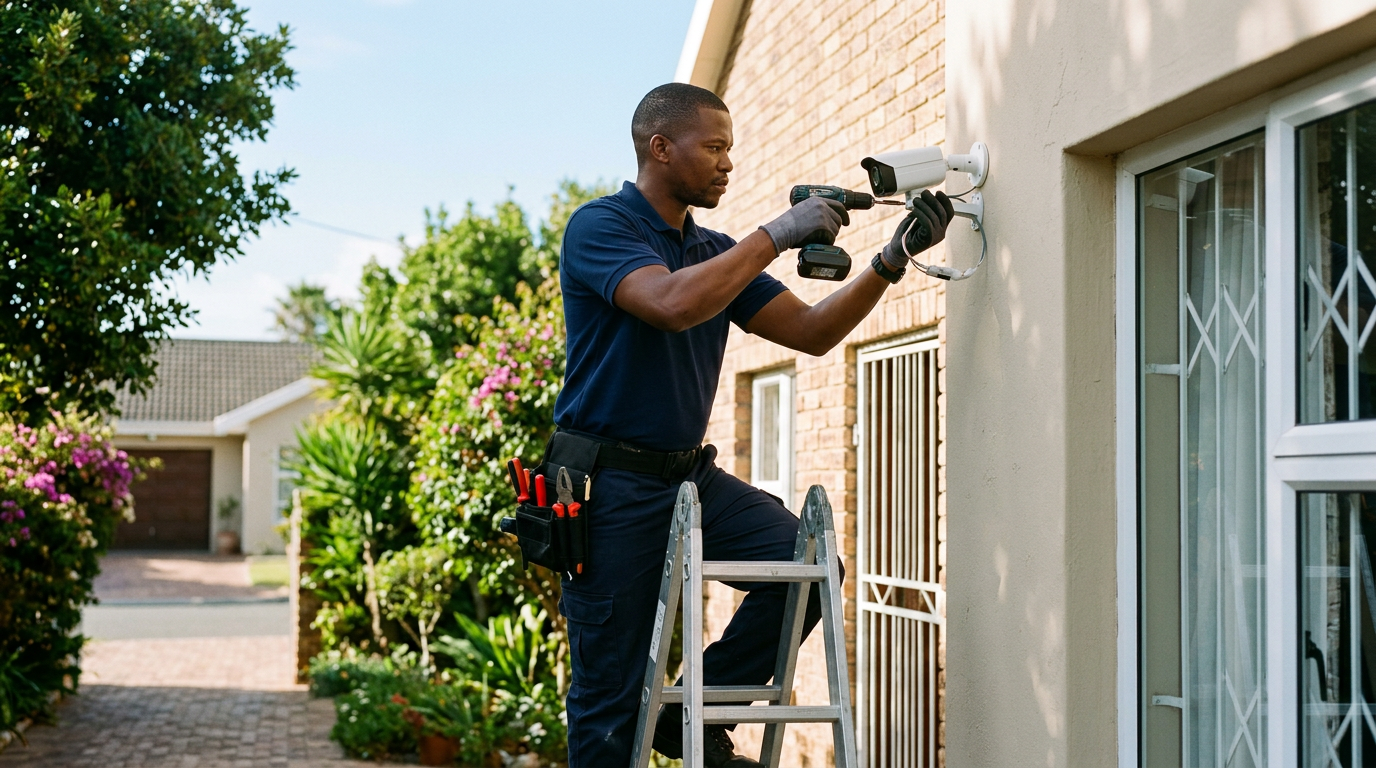
Home and business security isn't one product.
An alarm installation, CCTV system, electric fence, access-control system and guarding contract can involve very different equipment, services and regulatory considerations.
Before choosing a provider, start with what you're trying to protect, what service you're actually buying and what happens after the equipment is installed.
What security systems can cost
Security pricing varies substantially according to equipment, property size, installation complexity, monitoring and ongoing service.
Instead of treating every security product as having one reliable national price, use these as broad 2026 planning examples:
| Security service | Useful budgeting approach |
|---|---|
| Basic alarm installation | Installation labour can start around R1,900–R3,100 in current market guides, before the final equipment/system scope is considered |
| Complete alarm system | Often several thousand rand and can rise well above R10,000 as sensors, zones, outdoor detection and equipment are added |
| CCTV installation | Basic installation examples can start around R2,500–R6,300, with complete systems varying according to cameras, recorder/storage, cabling and equipment |
| Outdoor beams/sensors | Quote according to number, type, placement and integration |
| Electric fencing | Quote according to fence length, energiser, installation conditions and compliance requirements |
| Armed response/monitoring | Usually an ongoing service agreement; compare the actual monthly service and contract rather than assuming one national tariff |
| Access control/gate automation | Quote according to motor/system, access method, existing infrastructure, electrical work and installation |
These are broad market examples, not prescribed national rates.
A quote for installation labour alone isn't the same thing as a quote for a complete installed security system.
Start with a site assessment
A useful security quote should reflect the actual property.
Depending on the service, a provider may need to consider:
- entrances;
- windows;
- perimeter;
- blind spots;
- outdoor areas;
- walls and fencing;
- pets;
- lighting;
- existing equipment;
- internet/connectivity;
- power;
- backup power;
- gate access; and
- how the property is used.
Be cautious about comparing generic phone estimates when providers haven't been given the same information.
Alarm systems: compare the actual system
Ask what the alarm quote includes.
That may include:
- control panel;
- keypad;
- door/window contacts;
- indoor sensors;
- outdoor sensors;
- panic buttons;
- siren;
- app or remote access;
- communication equipment;
- installation;
- programming; and
- backup battery.
Also establish whether monitoring or armed response is included or contracted separately.
CCTV: cameras are only part of the system
“Four cameras installed” doesn't tell you enough.
Ask about:
- camera type;
- image resolution;
- night performance;
- field of view;
- recorder;
- storage capacity;
- retention period;
- remote viewing;
- cabling;
- internet requirements;
- power requirements;
- backup power;
- installation; and
- ongoing support.
Think about where cameras point too.
CCTV use can involve privacy considerations, particularly where cameras capture employees, neighbours, public areas or other identifiable people.
Electric fencing has specific compliance requirements
Electric fencing isn't simply another alarm accessory.
South Africa's Electrical Machinery Regulations provide for registered electric-fence-system installers and electric-fence system certificates.
If you're having an electric fence installed, altered or worked on, ask the provider what registration and certification requirements apply to the work being performed.
Where an electric-fence system certificate is required, make sure the appropriate certificate is issued by a person authorised to do so.
Don't treat Know a Pro's ID Verified badge as a substitute for these regulatory requirements.
Guarding and armed response involve regulated security services
The Private Security Industry Regulatory Authority — PSiRA — regulates South Africa's private security industry.
PSiRA states that a person may not render a security service for remuneration, reward, a fee or benefit unless registered as a security service provider in terms of the applicable legislation.
PSiRA also advises consumers to use registered security service providers and to check the registration of the security business and the security officers deployed to provide the service.
Registration can be checked through PSiRA's official verification services.
Check PSiRA registration independently
Don't rely only on a logo, uniform, website statement or marketing claim.
Ask for the provider's relevant PSiRA details and independently verify them through PSiRA.
PSiRA provides online verification for both individual security service providers and security businesses.
Depending on the service you're procuring, PSiRA's own consumer guidance also recommends checking matters such as the business's registration status and whether deployed security officers are registered.
Know a Pro's ID Verified badge is separate from PSiRA registration.
Monitoring and armed response aren't the same as installation
A company may install security equipment without necessarily providing every ongoing service associated with it.
Establish:
- who monitors the alarm;
- who provides armed response;
- whether monitoring is optional or required;
- monthly fees;
- contract duration;
- escalation procedures;
- what happens when an alarm activates;
- whether panic services are included; and
- what happens if communication with the system fails.
Don't assume installation automatically includes an armed-response contract.
Be careful with response-time promises
Security companies may provide information about how their response service operates, but actual response can be affected by circumstances such as:
- location;
- traffic;
- responder availability;
- access;
- incident conditions; and
- other operational factors.
Understand exactly what the contract promises rather than assuming a marketing statement is a guaranteed arrival time.
Ask about backup power
Security systems depend on power in different ways.
Ask what happens during:
- a power outage;
- battery depletion;
- internet failure;
- mobile-network failure; or
- failure of another communication path.
Establish which components have backup power and approximately how the backup arrangement is designed to operate.
Don't assume one battery keeps every camera, alarm, router, electric fence and gate working indefinitely.
Understand recurring costs
The installation price may only be the beginning.
Depending on the system, ongoing costs can include:
- monitoring;
- armed response;
- cloud storage;
- SIM/data;
- maintenance;
- battery replacement;
- equipment rental;
- software/app services; or
- service plans.
Ask which charges are once-off and which continue monthly or annually.
Ask who owns the equipment
Not every security arrangement works the same way.
Some equipment may be purchased outright, while other arrangements can involve rented or provider-owned equipment.
Before signing, establish:
- who owns the equipment;
- what happens if you cancel;
- whether anything must be returned;
- whether removal charges apply; and
- whether the equipment can be used with another provider.
Read the contract before signing
For an ongoing security service, check:
- contract term;
- monthly fee;
- annual increases;
- equipment ownership;
- monitoring;
- response service;
- maintenance;
- cancellation notice;
- early termination provisions;
- installation charges;
- callout charges; and
- any exclusions or limitations.
Don't rely on verbal explanations where the written contract says something different.
Protect passwords and security information
Security installation can involve sensitive information about your property.
This can include:
- alarm codes;
- passwords;
- camera access;
- Wi-Fi credentials;
- gate access;
- panic arrangements;
- property layout; and
- information about when a property is occupied.
Ask how administrator accounts are set up and who retains access after installation.
Change default passwords where appropriate and don't share security credentials unnecessarily.
Ask about maintenance and support
Security equipment needs ongoing attention.
Ask:
- what maintenance is recommended;
- who handles faults;
- whether support is included;
- what callouts cost;
- how batteries are tested or replaced;
- how software/firmware updates are handled where relevant; and
- what happens if equipment fails.
A system that worked when installed still needs to be maintained.
Reviews are useful information, not proof
Reviews can tell you about previous customers' experiences with:
- communication;
- installation;
- support;
- billing;
- maintenance; and
- problem resolution.
They don't prove that a provider will prevent crime, meet every response expectation or perform identically for you.
Use reviews alongside regulatory checks, written quotes and contracts.
Understand what ID Verified means
South African Pros complete identity verification as part of the Know a Pro signup process before their profile can go live.
Once completed, their profile can display the ID Verified badge.
ID Verified relates to identity verification.
It does not prove:
- PSiRA registration;
- electric-fence installer registration;
- qualifications;
- security expertise;
- competence;
- reliability;
- trustworthiness;
- safety; or
- quality of service.
Know a Pro does not claim that the ID Verified badge replaces independent regulatory checks.
Before you choose a security provider
Run through a final checklist:
- Do I understand exactly what service I'm buying?
- Has the property been properly assessed where appropriate?
- Is the equipment clearly specified?
- Have I checked relevant PSiRA registration where applicable?
- Have I asked about electric-fence compliance where applicable?
- Do I understand monitoring and armed response?
- Do I know what happens during a power or communication failure?
- Are recurring fees clear?
- Do I know who owns the equipment?
- Have I read the cancellation terms?
- Do I understand maintenance and support?
- Is the quote or contract in writing?
Find a security Pro
Know a Pro lets you browse security and safety Pros, compare available profile information and reviews, and decide who you want to contact.
Looking for security help?
Find local security and safety Pros and compare the information that matters for your property.
Prices in this article are broad market examples for general guidance and were reviewed in September 2026. Actual security-system and service costs vary according to provider, equipment, property, installation, monitoring and contract terms. Regulatory and registration requirements can change. Independently confirm applicable PSiRA, electric-fence and other compliance requirements with the relevant authority or appropriately registered professional before proceeding.
Imibuzo evame ukubuzwa
How much does a home alarm system cost in South Africa?
Costs vary according to the equipment, number of sensors and zones, installation and whether monitoring or armed response is included. Current 2026 market examples put basic installation labour around R1,900–R3,100, but a complete installed alarm system can cost several thousand rand or well above R10,000 depending on its scope. Compare the actual equipment and ongoing fees, not just the installation price.
What is PSiRA and why should I check registration?
PSiRA is the Private Security Industry Regulatory Authority, which regulates South Africa's private security industry. PSiRA states that security services for remuneration must be rendered by registered security service providers under the applicable legislation. Consumers can independently verify registered security businesses and individuals through PSiRA's official verification services.
Does an electric-fence installer need specific registration?
South Africa's Electrical Machinery Regulations provide for registered electric-fence-system installers and electric-fence system certificates. Ask what registration and certification requirements apply to your installation or alteration and make sure any required certificate is issued by an appropriately authorised person.
Do I need backup power for my security system?
It depends on the system and the level of continuity you need. Ask which components have backup power, what happens when mains power fails and whether cameras, networking equipment, alarm communication, electric fencing and gate systems have separate power requirements. Don't assume one backup battery powers the entire security setup.
Does ID Verified mean a security provider is PSiRA registered or guaranteed to be trustworthy?
No. ID Verified relates to identity verification. It doesn't prove PSiRA registration, qualifications, competence, security expertise, reliability, trustworthiness or safety. Where PSiRA registration or another regulatory requirement applies, check it independently.
Izinsiza Zokuphepha: thola uchwepheshe ongamthemba
Wonke uchwepheshe ku-Know a Pro uqinisekiswa nge-ID ngaphambi kokuba abonakale. Sesha indawo yakho bese uxhumana nochwepheshe oqinisekisiwe ngokuqondile, ngaphandle komuntu ophakathi.
Thola Uchwepheshe