
Deur die Know a Pro-span
Bygewerk 24 Sept 20268 min lees
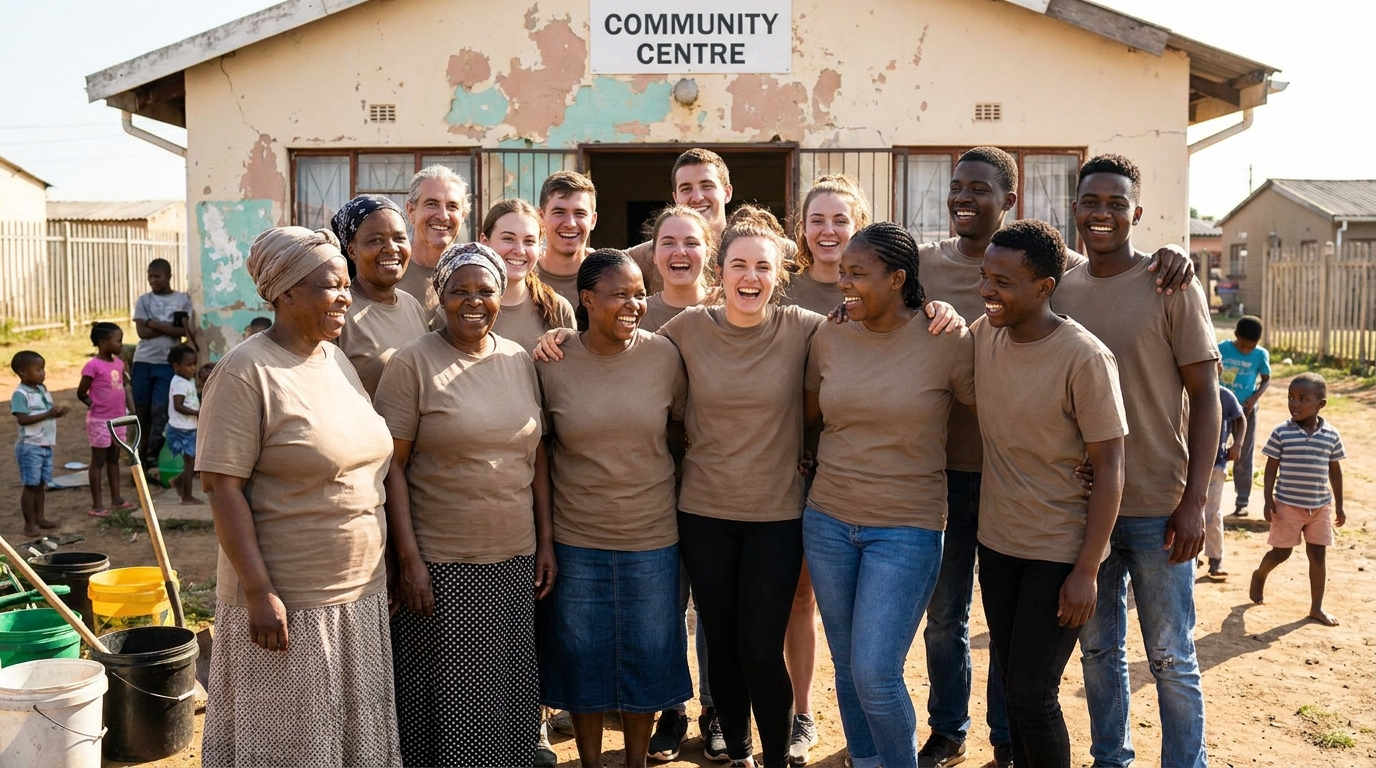
South Africa has thousands of people working through non-profits, charities, community groups and informal initiatives to address needs in their communities.
You might be looking for somewhere to donate, somewhere to volunteer, or an organisation that can help you or someone you know.
The challenge is working out what an organisation actually does and which checks matter before you get involved.
A registration number can be useful. So can photographs, reviews and community feedback. But no single badge, number or social-media page tells you everything.
Here's how to look a little deeper.
What kinds of organisations might you find?
Community and non-profit work can include:
- feeding programmes;
- food gardens;
- shelters;
- services for children and families;
- youth programmes;
- education and skills development;
- animal rescue and welfare;
- services for older people;
- disability support;
- environmental projects;
- community development;
- disaster or emergency relief;
- faith-based community work; and
- other local initiatives.
The structure, registration and regulatory requirements can differ depending on what the organisation actually does.
Start with what the organisation actually does
Before donating or volunteering, understand:
- who the organisation serves;
- what programmes it runs;
- where it operates;
- how long it has been operating;
- who is responsible for it;
- what kind of help it currently needs; and
- how donations or volunteer support are intended to be used.
A clear mission is useful, but look for practical information about the work too.
Understand NPO registration
In South Africa, qualifying non-profit organisations can apply for registration through the Department of Social Development.
NPOs can include organisations such as NGOs, community-based organisations and faith-based organisations.
If an organisation says it is a registered NPO, ask for its registration number and independently verify the claim through the appropriate official channel.
NPO registration is useful information, but it isn't a Know a Pro guarantee about the organisation or every activity it carries out.
NPO and PBO don't mean the same thing
This distinction causes plenty of confusion.
NPO registration relates to the non-profit registration framework administered through the Department of Social Development.
PBO approval is a tax status administered by SARS for qualifying public benefit organisations.
An organisation may therefore talk about NPO registration, PBO approval or both, depending on its structure and status.
Don't treat the terms as interchangeable.
What does Section 18A mean?
Section 18A is especially relevant if you want to claim a tax deduction for a qualifying donation.
Certain qualifying organisations can obtain specific approval to issue Section 18A tax-deductible receipts.
That approval is not automatic simply because an organisation is an NPO or PBO.
If tax deductibility matters to you:
- ask whether the organisation currently has Section 18A approval;
- independently check the claim where possible;
- make sure the donation itself qualifies; and
- obtain a valid Section 18A receipt containing the required information.
Don't assume every charitable donation is tax deductible.
Look beyond a registration number
Registration information can be useful, but your checks shouldn't necessarily stop there.
Depending on the organisation and the type of support you're considering, look at:
- its stated activities;
- leadership/contact information;
- recent projects or updates;
- how donations are requested;
- whether its banking/payment details make sense;
- available reports or financial information where relevant;
- community feedback; and
- how willing the organisation is to answer reasonable questions.
The amount of checking you do may reasonably increase with the size of the donation or commitment.
Ask how your donation will be used
If you're donating money, ask what the organisation currently needs.
Your donation might support:
- a particular programme;
- food;
- supplies;
- veterinary care;
- transport;
- shelter costs;
- education;
- operating expenses; or
- the organisation's wider work.
Don't assume every donation goes directly to a single beneficiary or project unless the organisation specifically says so.
Legitimate organisations can have real operating costs too.
Check payment details carefully
Before sending money:
- confirm who you're paying;
- check the payment details provided through an appropriate official contact;
- be cautious if banking details suddenly change;
- keep proof of payment; and
- ask for appropriate acknowledgement or documentation where relevant.
For a significant donation, take extra care before transferring funds.
ID verification on Know a Pro doesn't guarantee a bank account, payment request or donation transaction.
Donating goods can require planning too
Food, clothing, furniture, pet supplies and other goods can be incredibly useful when they match what an organisation actually needs.
Before arriving with a boot full of donations, ask:
- what is currently needed;
- what isn't needed;
- whether used goods are accepted;
- when donations can be dropped off;
- whether collection is available; and
- whether there are hygiene, storage or safety considerations.
A donation is most useful when the organisation can actually use it.
Volunteering is more than simply showing up
Organisations may need very different kinds of help.
Opportunities could include:
- food preparation;
- administration;
- fundraising;
- transport;
- animal care;
- maintenance;
- tutoring;
- professional skills;
- event assistance; or
- ongoing programme support.
Ask what is genuinely needed rather than assuming.
Ask about volunteer requirements
Depending on the work, an organisation may have:
- minimum-age requirements;
- orientation or training;
- scheduled volunteer times;
- confidentiality rules;
- health or safety requirements;
- screening requirements;
- safeguarding procedures; or
- limits on what volunteers may do.
These can be particularly important when work involves children, vulnerable people, animals, confidential information or potentially hazardous environments.
Safeguarding deserves separate attention
Identity verification isn't a substitute for safeguarding.
Organisations working with children or vulnerable people may need policies, screening, supervision and other safeguards appropriate to their activities.
If you're volunteering in a sensitive setting, ask how the organisation manages volunteer access, supervision and safeguarding.
If you're seeking services for a vulnerable person, ask the questions relevant to that service rather than relying only on a profile badge or review.
Be thoughtful with photographs and stories
Community organisations often use photographs to show their work.
But beneficiaries are real people, not marketing props.
Be particularly careful with images or stories involving:
- children;
- vulnerable adults;
- medical circumstances;
- shelters;
- abuse;
- poverty;
- disability; or
- other sensitive personal situations.
Respect privacy, dignity and appropriate consent.
Reviews and community feedback can provide context
Genuine reviews may describe someone's previous experience with an organisation.
They can be useful alongside other information.
But reviews don't prove:
- NPO registration;
- PBO status;
- Section 18A approval;
- good governance;
- appropriate use of donations;
- safeguarding;
- financial management; or
- future conduct.
Use reviews as one source of context rather than a substitute for independent checks.
Understand what ID Verified means
South African Pros complete identity verification as part of the Know a Pro signup process before their profile can go live.
Once completed, their profile can display the ID Verified badge.
ID Verified relates to identity verification.
It does not prove:
- NPO registration;
- PBO approval;
- Section 18A approval;
- governance;
- financial management;
- appropriate use of donations;
- safeguarding;
- volunteer safety;
- service quality; or
- that an organisation or cause is trustworthy.
It is one piece of information, not a guarantee or endorsement of the organisation.
If you need help yourself
You may be looking for an organisation because you need food assistance, shelter, animal-welfare support, family services, community assistance or another form of help.
Before sharing sensitive personal information:
- understand what service is offered;
- check who you're communicating with;
- ask what information is actually required;
- understand how the service works; and
- avoid sharing unnecessary sensitive information publicly.
For emergencies or situations involving immediate danger, use the appropriate emergency or specialist service rather than relying on a directory listing.
Before you donate or volunteer
Run through a quick checklist:
- Do I understand what this organisation actually does?
- Have I checked any registration/status claims that matter to me?
- Do I understand the difference between NPO, PBO and Section 18A?
- Do I know how my donation or time is intended to be used?
- Have I confirmed payment details carefully?
- Have I asked about volunteer requirements?
- Are safeguarding issues relevant?
- Am I comfortable with the information available?
Caring about a cause and checking it properly can happen at the same time.
Find a local organisation
Know a Pro lets you browse community and non-profit listings, view the information they've chosen to share, read available reviews and decide who you want to contact.
Looking for a local organisation?
Explore local organisations, learn about their work and make your own checks before donating, volunteering or getting in touch.
This article provides general information and was reviewed in September 2026. Registration, tax, donation, safeguarding and other requirements vary according to the organisation and its activities. Independently confirm any NPO, PBO or Section 18A status that matters to your decision and obtain professional advice where appropriate.
Gereelde vrae
How can I check whether an organisation is a registered NPO?
Ask for its NPO registration number and independently verify the claim through the appropriate Department of Social Development/NPO channel. Remember that NPO registration, SARS PBO approval and Section 18A approval are different things.
Are NPO and PBO the same thing?
No. NPO registration falls under South Africa's non-profit registration framework, while PBO approval is a SARS tax status for qualifying public benefit organisations. An organisation may have one or both depending on its circumstances.
Is every donation to an NPO tax deductible?
No. Tax deductibility isn't automatic because an organisation is an NPO or PBO. Certain qualifying organisations have separate Section 18A approval allowing them to issue tax-deductible receipts for qualifying donations. Confirm current approval and obtain a valid receipt if this matters to you.
Can I volunteer through an organisation I find on Know a Pro?
You can contact an organisation about opportunities it genuinely offers. Volunteer needs, screening, age requirements, training, safeguarding and availability vary, so confirm the organisation's current requirements directly.
Does ID Verified mean Know a Pro guarantees an organisation or cause?
No. ID Verified relates to identity verification. It doesn't prove NPO registration, PBO or Section 18A status, governance, financial management, safeguarding, appropriate use of donations or that an organisation is trustworthy.
Vind 'n pro vir Gemeenskap, NRO & Nie-Winsgewend wat jy kan vertrou
Elke pro op Know a Pro is ID-geverifieer voordat hulle sigbaar word. Deursoek jou area en kontak 'n geverifieerde pro direk, geen tussenganger nie.
Vind 'n Pro