
Deur die Know a Pro-span
Bygewerk 25 Sept 20267 min lees
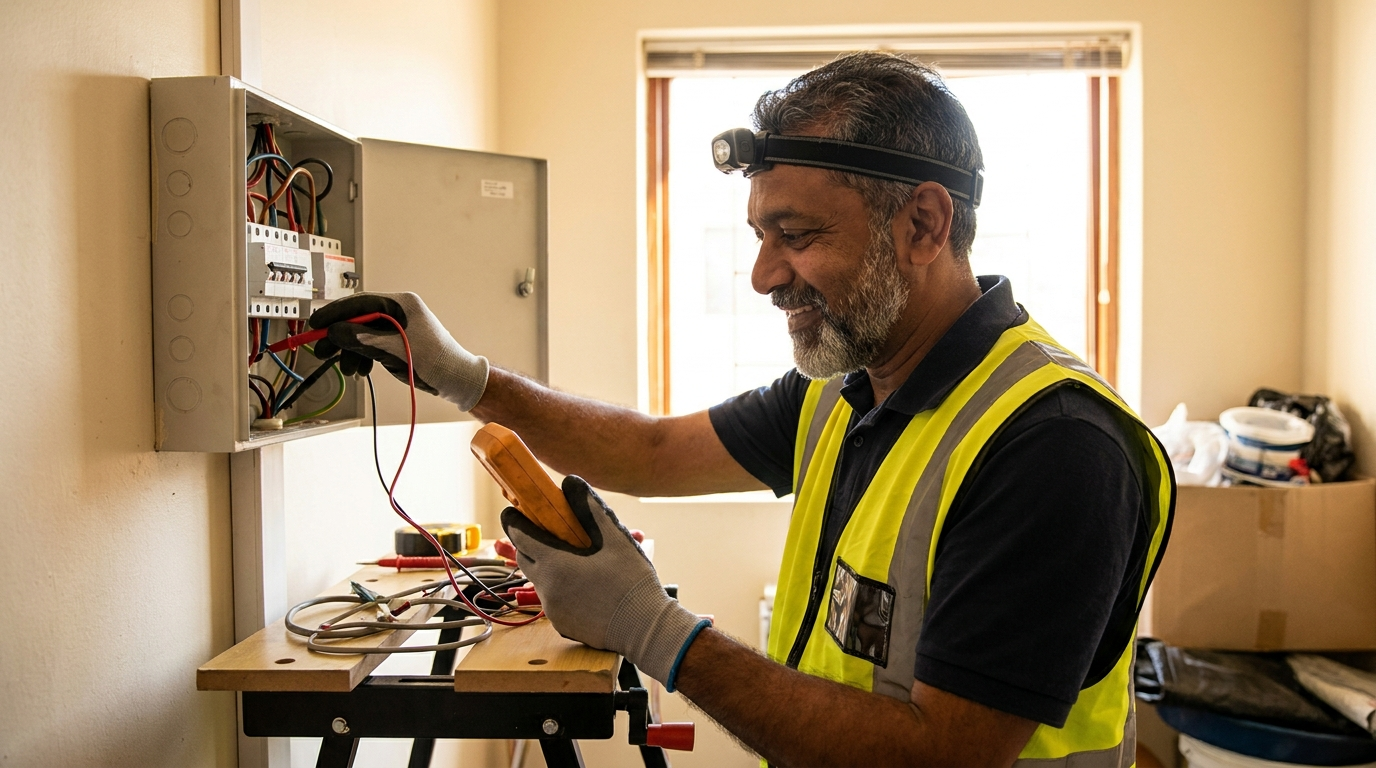
Electricity isn't the place to guess
There are plenty of household jobs people choose to tackle themselves.
Electrical installation work is different because mistakes can expose people and property to serious hazards.
You don't need to diagnose an electrical fault before contacting someone.
Knowing what not to touch, recognising unusual behaviour and being able to explain what you've observed are already useful.
1. Stop overloading plug points
Plug points and electrical equipment have limits.
Eskom warns that connecting multiple appliances to a single plug point can overload it. Overloaded equipment can overheat and create fire or electric-shock hazards.
Be particularly cautious with high-power appliances.
Eskom specifically advises plugging heaters directly into a wall socket rather than using multi-plugs or extension cords for them.
If your household regularly depends on overloaded or improvised arrangements, discuss the situation with an appropriate electrical professional rather than adding more adapters.
2. Don't improvise electrical connections
Don't:
- put bare wires into sockets;
- make improvised connections;
- join damaged electrical cords with ordinary tape;
- use visibly damaged or frayed cords; or
- tamper with electrical infrastructure.
Eskom specifically warns against unsafe wiring and connections because of electric-shock and fire risks.
If electrical equipment or wiring is damaged, stop using it where this can be done safely and arrange appropriate assessment or repair.
3. Don't open the distribution board to investigate a fault
A tripped breaker or safety device tells you something has happened.
It doesn't tell an untrained homeowner what the underlying fault is.
Don't remove the distribution-board cover, touch internal components, try to test live conductors, bypass a breaker or protection device, or repeatedly force a circuit back on.
If a circuit or protection device repeatedly trips, arrange appropriate assessment.
If you're unsure what is safe to touch, don't touch it.
4. Stop treating repeated tripping as an inconvenience
One trip can have many possible causes.
Repeated tripping deserves attention rather than repeatedly resetting equipment without understanding the cause.
Tell the electrician:
- which circuit or device appears affected, if known;
- what was operating when it happened;
- whether it happens repeatedly;
- whether you've noticed heat, smells, sounds or visible damage; and
- whether any electrical work or appliance changes happened recently.
Finding the cause is the electrician's job. Your observations simply give them more to work with.
5. Don't ignore heat, discolouration, burning smells or buzzing
Warning signs can include:
- sockets or switches that seem unusually warm or look discoloured;
- burning or melting smells;
- visible scorching;
- buzzing or crackling from electrical equipment;
- repeated tripping;
- damaged plugs or cords; or
- sparks or other unusual electrical behaviour.
These signs don't all point to the same fault.
They are reasons to stop using affected equipment where this can be done safely and seek appropriate help.
If there is smoke, fire, exposed live infrastructure, fallen conductors or another immediate hazard, keep away and contact the appropriate emergency service, electricity supplier or municipality as applicable.
6. Water and electricity need extra caution
If water is leaking near sockets, wiring, a distribution board or electrical equipment, don't reach into the wet area to unplug, switch or inspect equipment.
Keep away from potentially energised water or wet electrical equipment and get appropriate help.
7. The boundary isn't simply “behind the wall”
You may have heard that anything behind the wall is off-limits and everything else is fair game.
The real picture isn't that simple.
South Africa's Electrical Installation Regulations govern electrical installation work. They contain requirements relating to who may undertake installation work, electrical contractors, Registered Persons, inspection and testing, and Certificates of Compliance.
Using household electrical equipment is different from altering a fixed electrical installation.
Don't attempt fixed electrical installation work unless you are appropriately competent and legally entitled to perform it.
When in doubt, use an appropriately registered electrical contractor.
8. Know the difference between an electrical contractor and a Registered Person
South Africa's Electrical Installation Regulations contain separate provisions for electrical contractors and Registered Persons.
A Registered Person has a specific role under the regulations in inspecting, testing and issuing electrical Certificates of Compliance within the scope of their registration.
Under Regulation 9, only a Registered Person may issue a CoC.
The terms are related, but they aren't interchangeable.
9. Understand what an electrical CoC actually tells you
An electrical Certificate of Compliance is a regulatory document relating to an electrical installation.
It isn't a Know a Pro badge.
It isn't a general character reference for the electrician.
It isn't a guarantee that nothing will ever go wrong with the installation.
Under the Electrical Installation Regulations, a Registered Person may issue the CoC only after the required inspection and testing and after satisfying themselves that the applicable requirements are met.
When selling a property
The Department of Employment and Labour has reiterated that a valid electrical CoC must be obtained and provided before the sale or transfer of property.
CoCs aren't only about property sales, though. They relate to the electrical installation itself.
10. Don't assume an old CoC covers later electrical changes
A CoC relates to the electrical installation covered by the certificate and its accompanying test report at the relevant time.
If electrical installation work is later added or altered, don't simply assume an older certificate automatically covers the later work.
Ask the appropriate electrical professional what certification is required for the new or altered work.
11. Ask the right question before hiring
Instead of simply asking “Are you qualified?”, ask questions relevant to the work:
- Are you appropriately registered for this electrical installation work?
- Will a CoC be required for this work?
- If so, who will inspect and test the work and issue it?
- Is that person a Registered Person with the appropriate scope?
- What work is included in the quote?
- What happens if additional faults are found?
The requirements depend on the work being done.
12. ID Verified is not an electrical qualification
On Know a Pro, ID Verified means the Pro completed Know a Pro's required identity-verification process.
It doesn't confirm:
- electrical qualifications;
- electrical-contractor registration;
- Registered Person status;
- authority to issue a CoC; or
- competence for the electrical work you need.
Check relevant electrical credentials separately.
13. Reviews don't replace electrical credentials
Reviews can give you context from experiences submitted by previous customers.
They don't tell you whether someone has the registration required for particular electrical installation work.
They also don't guarantee workmanship or electrical safety.
Before the electrician arrives: quick checklist
- Note what happened and when.
- Note which appliance or area appeared affected, if known.
- Mention repeated tripping, smells, sounds, sparks, heat or visible damage.
- Mention recent electrical work or appliance changes.
- Don't dismantle electrical equipment to investigate.
- Keep away from exposed wiring, fallen conductors or wet electrical hazards.
- Ask what registration is relevant to the work.
- Ask whether a CoC applies and who will issue it if required.
You don't need to diagnose the fault yourself.
The bottom line
Electrical safety isn't about being afraid to use electricity around the house.
It's about knowing where ordinary household use ends and electrical installation work or fault-finding begins.
Don't improvise electrical connections, ignore repeated warning signs or dismantle electrical systems to investigate faults yourself.
And when registration or a Certificate of Compliance matters, check that separately rather than relying on a profile badge or review score.
This article provides general consumer safety information and was reviewed in September 2026. Electrical work and certification requirements depend on the installation and work involved. Do not touch exposed conductors or investigate suspected live electrical faults yourself. For immediate electrical hazards, fire or injury, keep clear and contact the appropriate emergency service, electricity supplier, municipality or electrical professional.
Looking for an electrician?
Explore local electrical Pros, compare their profiles and check the registration or credentials relevant to the work you need done.
Gereelde vrae
Who can issue an electrical CoC in South Africa?
Electrical CoCs operate under South Africa's Electrical Installation Regulations and must be issued within the applicable registered-person framework after the required inspection and testing. For electrical work, check that the contractor and person responsible for certification have the appropriate registration for the work involved.
What are warning signs of an electrical problem at home?
Repeated tripping, burning or melting smells, unusual buzzing or crackling, visible scorching, damaged electrical equipment or other unusual electrical behaviour can be reasons to stop using the affected equipment where safe and arrange appropriate assessment. Don't dismantle electrical equipment to investigate a suspected live fault yourself.
Can I do electrical work myself in South Africa?
South Africa's Electrical Installation Regulations govern electrical installation work and contain requirements around who may undertake it. Ordinary use of household electrical equipment is different from altering fixed electrical installations. If you're unsure whether work requires an appropriately registered electrical contractor, check before attempting it yourself.
Do I need an electrical CoC when selling my home?
The Department of Employment and Labour states that a valid electrical Certificate of Compliance must be obtained and provided before the sale or transfer of property. Property circumstances can differ, so check the current requirements when preparing a transfer.
Does ID Verified mean someone is a registered electrician?
No. ID Verified means the Pro completed Know a Pro's required identity-verification process. It doesn't confirm electrical qualifications, electrical-contractor registration, Registered Person status or authority to issue an electrical Certificate of Compliance. Check the relevant electrical credentials separately.
Vind 'n pro vir Tuisdienste wat jy kan vertrou
Elke pro op Know a Pro is ID-geverifieer voordat hulle sigbaar word. Deursoek jou area en kontak 'n geverifieerde pro direk, geen tussenganger nie.
Vind 'n Pro